
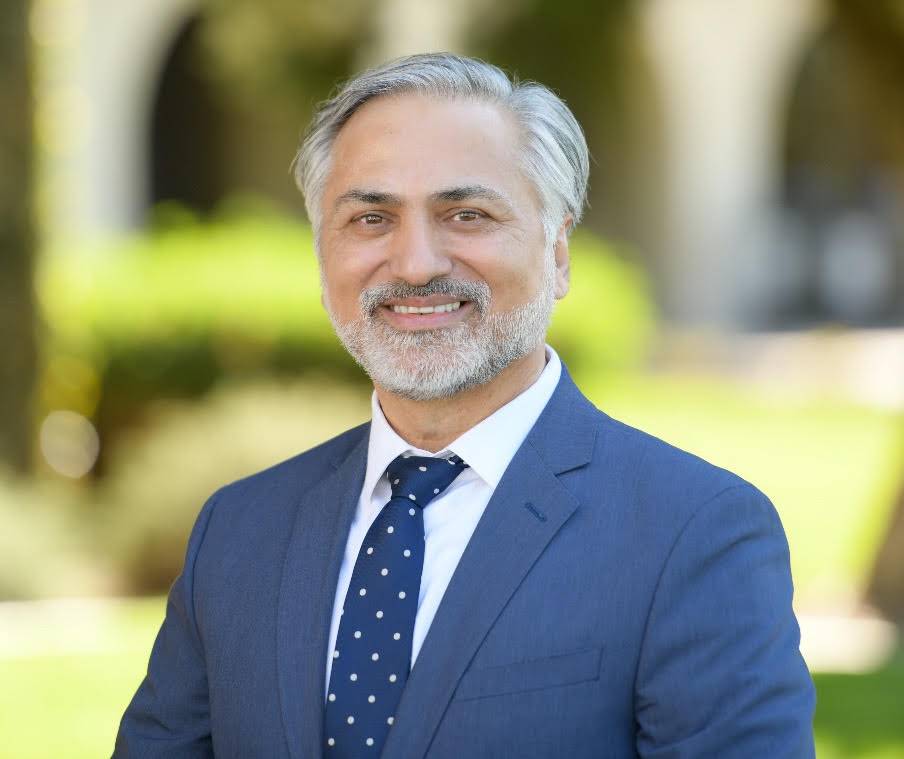
I am Dr. Alex Sherm, and I serve as the Doctor of Management Program Chair at International American University. With over 20 years of experience in higher education, academic leadership, and global financial strategy, my work centers on bridging academic theory with real-world application across finance, economics, data analytics, leadership, and management information systems.
I am guided by a simple principle:
“Listen to understand, not respond; lead with strategy; and recognize that life is business.”
I hold a Doctor of Business Administration, along with dual Master’s degrees in Economics and Applied Mathematics, and undergraduate degrees in Finance and Applied Mathematics. My academic philosophy is grounded in the belief that management is both a discipline and a practice; one that requires analytical rigor, ethical reasoning, and the ability to operate effectively in complex, global environments.
As Program Chair, I have led the development and expansion of executive-level doctoral programs, strengthening enrollment, academic quality, and student outcomes through strategic program design and innovation. I am deeply committed to mentoring doctoral candidates throughout their dissertation journey, guiding them in developing research that is both academically rigorous and practically relevant for industry leaders and policymakers.
In addition to my academic leadership, I serve as a Peer Evaluator for the Transnational Association of Christian Colleges and Schools, contributing to institutional assessments and supporting continuous improvement across higher education institutions.
Prior to academia, I held senior financial leadership roles within the government sector, where I advised on foreign direct investment strategies, contributed to monetary policy development, and supported national financial frameworks. I also worked in international debt management, collaborating with global institutions such as the International Monetary Fund, World Bank, European Bank for Reconstruction and Development, and Asian Development Bank to secure financing for major infrastructure projects.
My teaching and leadership are guided by two core principles. First, “Listen to understand, not respond.” This emphasizes the importance of intentional listening, critical thinking, and informed decision-making. Second, “Life is business.” This reflects the idea that strategic thinking, accountability, and value creation extend beyond organizations into everyday life, shaping how individuals lead and make decisions.
In the classroom, I design learning environments that are interactive, discussion-driven, and application-focused. I integrate real-world case studies, data-driven decision-making, and emerging topics such as AI and digital transformation to prepare students for executive-level leadership.