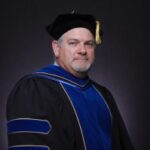

Sanaz Tehrani

PhD

The Story of Life

The Architecture of Wisdom: Designing a Life of Impact

My journey is not merely a sequence of events; it is a deliberate design process. As an engineer, management scholar, and researcher, I have learned that life, like a complex system, requires more than just technical precision. It requires the structural integrity of resilience and the guiding light of wisdom.

I believe that while life presents us with friction and resistance, these are not system failures. They are the very forces that forge our strength.

The Hierarchy of Value: Why I Choose Wisdom

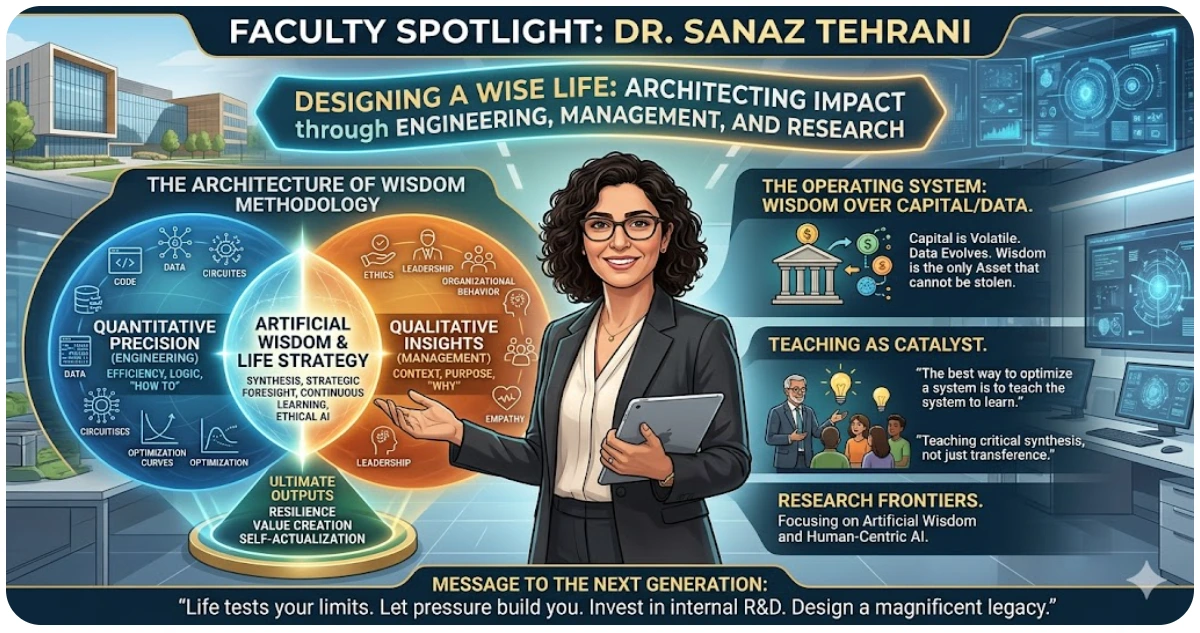
In the logic of management, we often weigh assets. If I were asked to choose between capital, data, and wisdom, my choice is absolute: I choose wisdom. Capital is volatile. Data evolves. But wisdom is the ultimate “Operating System.” It is the only asset that cannot be liquidated or stolen. With wisdom, an engineer can start from a “zero-state” and re-engineer a masterpiece. Wisdom allows you to synthesize knowledge into value and transform raw potential into a lived legacy.

Engineering the Self: Life Design through Research

My PhD in Management and my background in engineering have taught me that the most important project we will ever manage is ourselves.

  • Design as Strategy: I utilize design thinking not just for software, but to architect my own path. To “design better” means to move beyond reacting to life and instead, proactively mapping a strategy for growth.
  • Research as Self-Discovery: Education and research are more than academic exercises; they are tools for self-actualization. Through the rigors of the PhD and the logic of engineering, I have found that the more we understand the world, the more clearly we see ourselves.
  • The Feedback Loop of Growth: Every challenge I face is a data point. I use these to iterate, refine, and enhance my life’s strategy. When you understand your own “internal architecture,” you become immune to the need for external validation.
Teaching: The Transfer of Intellectual Capital

For me, the classroom is a laboratory for human potential. I do not teach to transfer information; I teach to catalyze transformation.

The best way to optimize a system is to teach the system to learn. The most powerful interface we have is communication.

In my mentorship, I focus on:

  • Systemic Confidence: Moving from uncertainty to technical and personal clarity.
  • Critical Synthesis: Teaching students not just what to think, but how to architect their thoughts.
  • The Value Proposition of Learning: In an era of AI, knowledge is a commodity. The true value lies in the “Wisdom of Application”—the ability to adapt and evolve.
Innovation and the Frontier of Artificial Wisdom

As a researcher in AI and emerging technologies, I explore the intersection of human insight and machine intelligence. I am focused on Artificial Wisdom—the idea that technology should not just be “smart,” but should be designed to enhance human flourishing and ethical decision-making.

The future belongs to the “Continuous Learner”—the individual who treats their life as a living research project, constantly seeking better strategies to manage their impact and design their destiny.

My Message to the Next Generation of Architects

Life will test your structural limits; let those pressures build you. Choose wisdom as your foundation. Invest in your own “internal R&D.”

When you respect your own design, the world will follow suit. When you contribute value and uplift the systems around you, success is not a goal, it is a natural output. You already possess the raw materials; your job is to design them into something magnificent.

Reflection for MY Life Strategy:

As you bridge the gap between being an “Engineer-Manager” and a “PhD-Strategist,” how do you see the qualitative insights of your management research refining the quantitative precision of your engineering mindset to create this “Artificial Wisdom”?

Read Other Spotlight Stories

This will close in 0 seconds

This will close in 0 seconds